Vibration
Practitioners describe every crystal as holding a steady, ordered structure, and believe that keeping it close can help the body and mind settle into a steadier rhythm of their own.
Crystal Healing
Crystal healing is an old practice of working with stones for calm, focus and intention. This page explains what it is, where it comes from and how people use it — gently, and without promises.
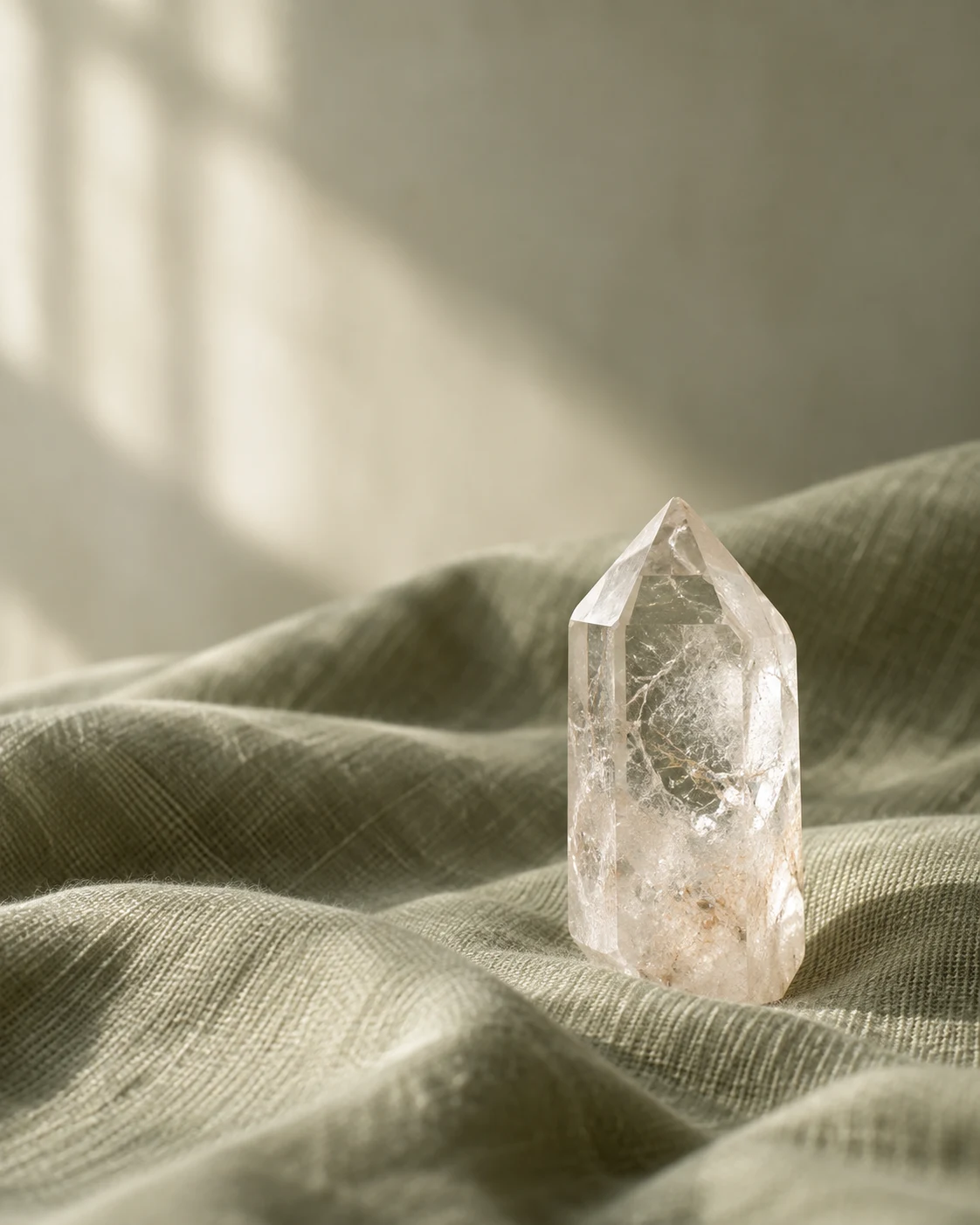
Long before they were collected, stones were kept close — carried for courage, set in rings for luck, placed in temples for peace. Crystal healing continues that instinct: the belief that something ancient, still and whole can help us feel a little more so.
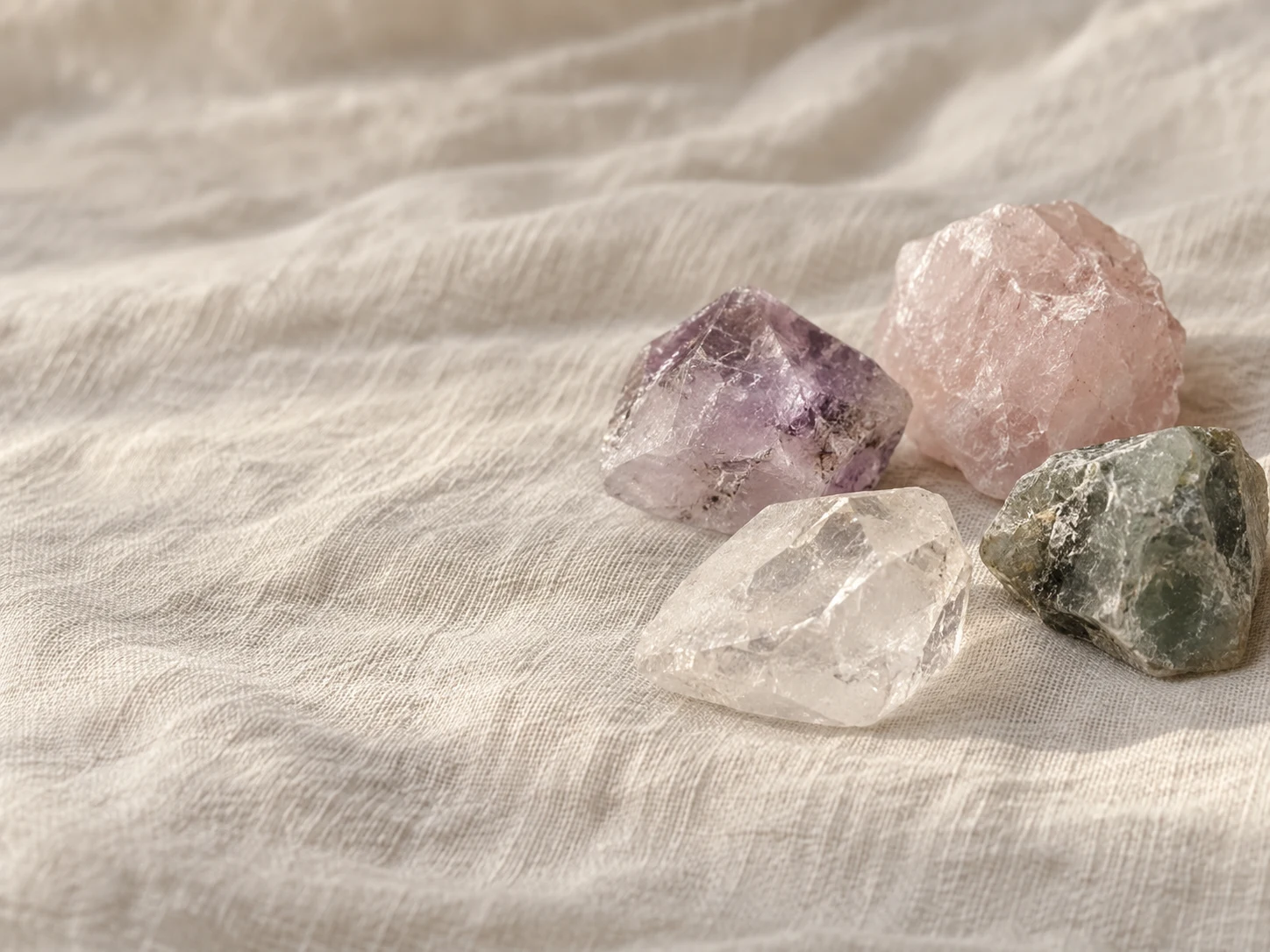
What it is
Crystal healing is a complementary, holistic practice in which natural stones — quartz, amethyst, jade and many others — are held, worn or placed around the body and home. Each stone is associated with particular qualities, such as calm, clarity, courage or protection.
It is less a treatment than a way of pausing. Choosing a stone asks you to name what you need; holding it gives that need a shape you can return to. Many people use it alongside meditation, prayer, breathwork or simply a quiet cup of tea.
In India, the practice meets a much older one: the gemstones of Vedic astrology, chosen not by colour or mood but by the planets of a birth chart.
Its roots
Across very different cultures, people reached for the same thing — a stone to hold on to.
Lapis lazuli, carnelian and turquoise were set into amulets, collars and burial pieces, worn for protection in this life and the next.
The word amethyst comes from amethystos — “not intoxicated”. The stone was believed to keep a clear head, and was carved into drinking cups.
Ratna shastra, the classical study of gems, appears in texts such as the Garuda Purana and Varahamihira’s Brihat Samhita, and ties nine gems to the nine grahas.
Jade was prized above gold for thousands of years — a stone of virtue, longevity and calm, carried close and passed down.
Crystal healing as most people meet it now took shape in the 1970s and ’80s, drawing these older threads together into a practice of rest, intention and reflection.
How it is understood
These are the beliefs practitioners hold — offered here to explain the practice, not as proven fact.
Practitioners describe every crystal as holding a steady, ordered structure, and believe that keeping it close can help the body and mind settle into a steadier rhythm of their own.
A stone gives attention somewhere to rest. Choosing one, holding it and returning to it becomes a small ritual — a physical reminder of what you mean to cultivate.
Many traditions pair stones with the body’s seven energy centres by colour, so that a crystal can be placed where it is believed to bring balance.
The seven chakras
In yogic tradition the body holds seven chakras — wheels of energy from the base of the spine to the crown. Crystals are paired with each by colour and quality.
Top of the head
Connection, stillness
Clear Quartz, Selenite
Between the brows
Intuition, insight
Amethyst, Lapis Lazuli
Throat
Expression, truth
Blue Lace Agate, Aquamarine
Centre of the chest
Love, compassion
Rose Quartz, Green Aventurine
Upper abdomen
Confidence, will
Citrine, Tiger’s Eye
Lower abdomen
Creativity, feeling
Carnelian, Orange Calcite
Base of the spine
Grounding, safety
Red Jasper, Black Tourmaline
Nine stones to know
The qualities below are the ones each stone is traditionally associated with. Hardness is on the Mohs scale — worth knowing, because it decides how a stone should be cared for.
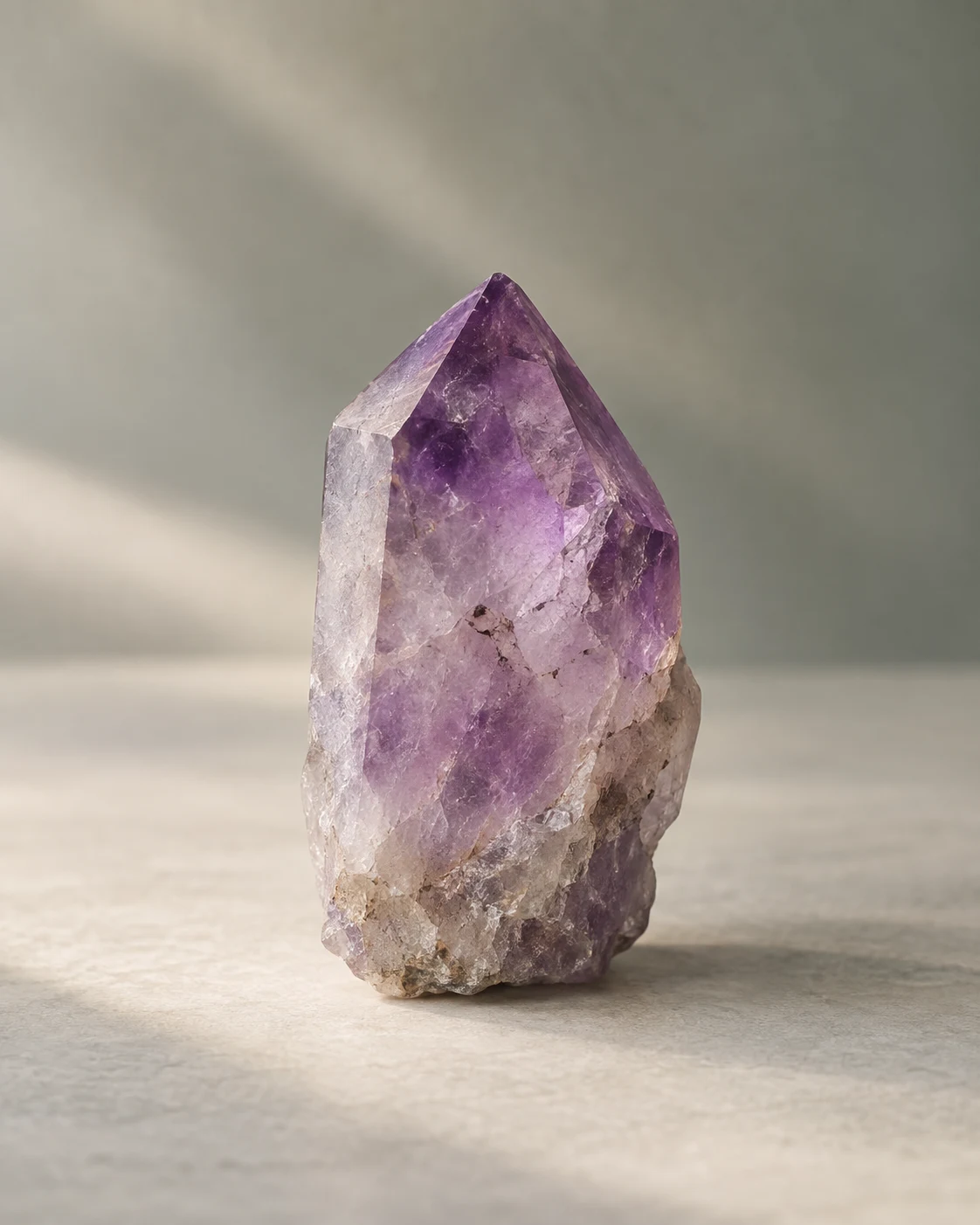
The stone of a quiet mind.
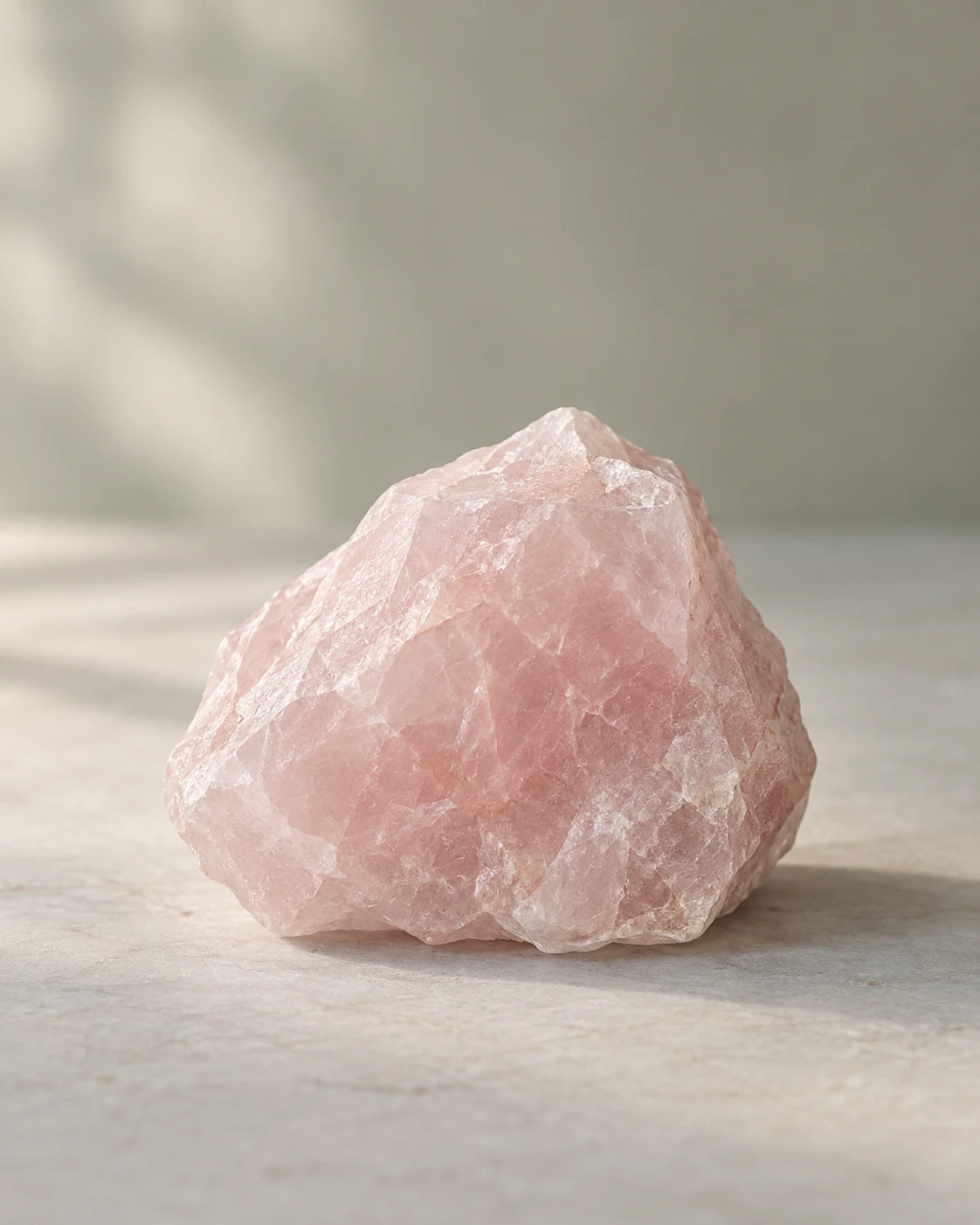
The stone of gentle love.
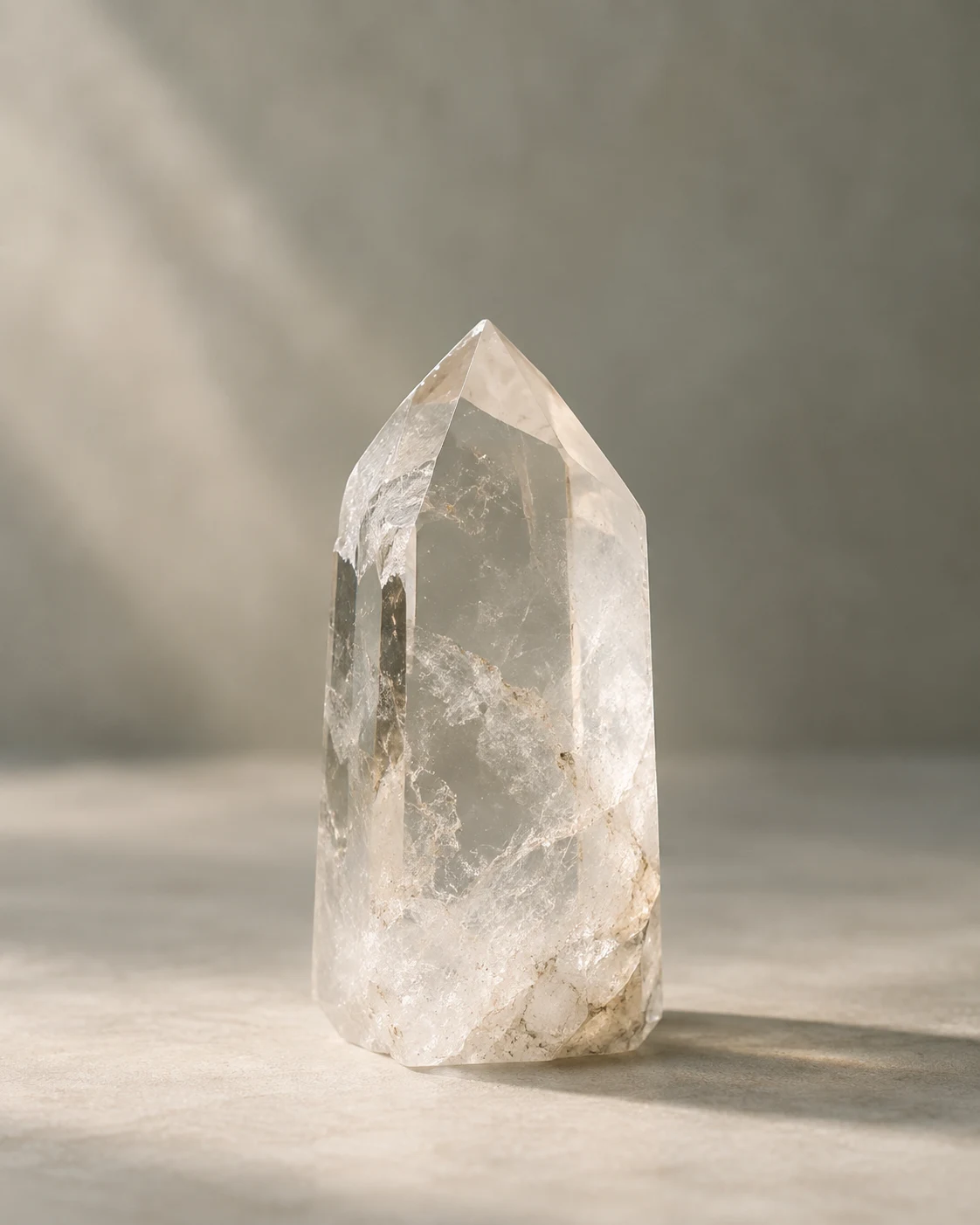
The master stone.
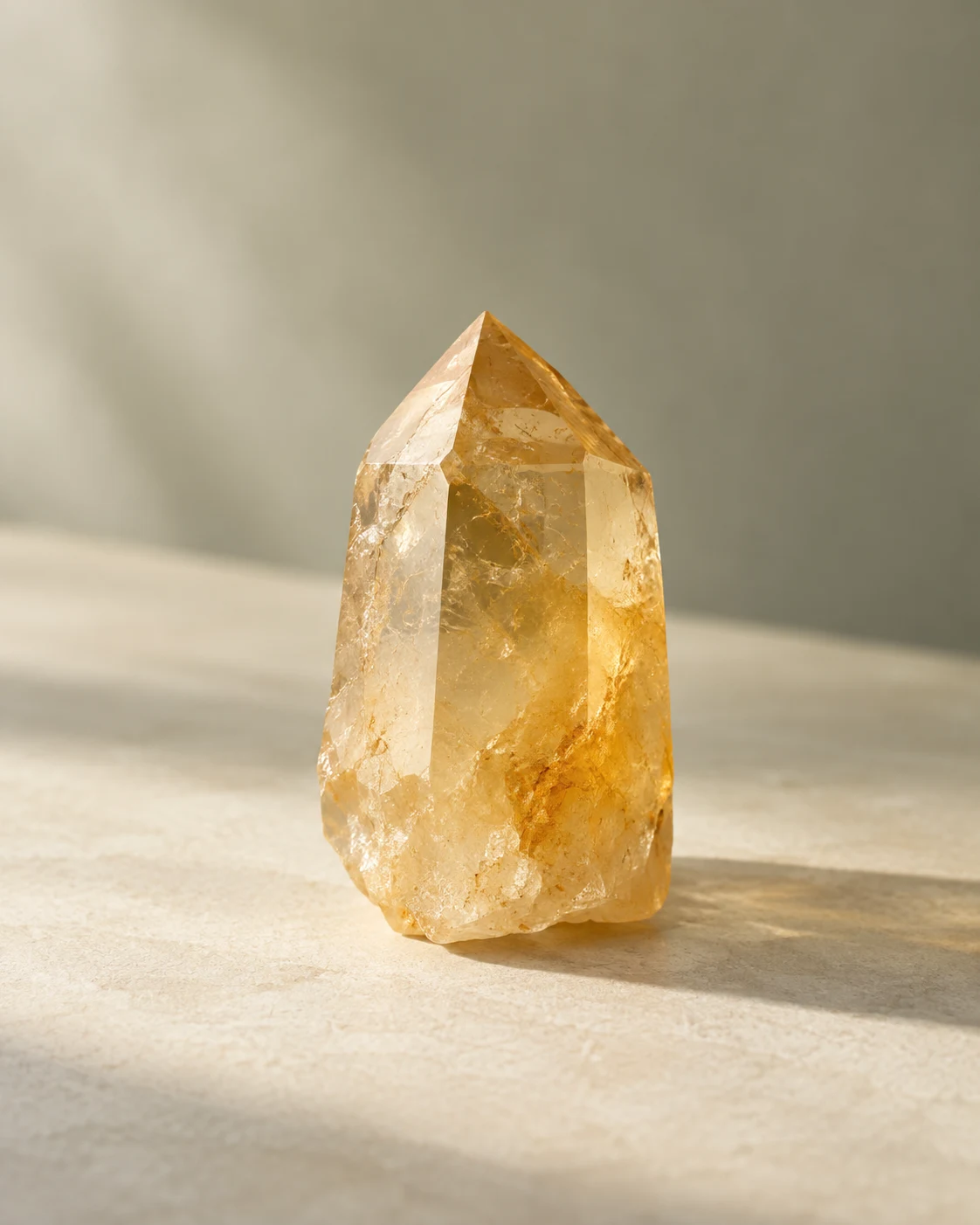
The stone of warmth.
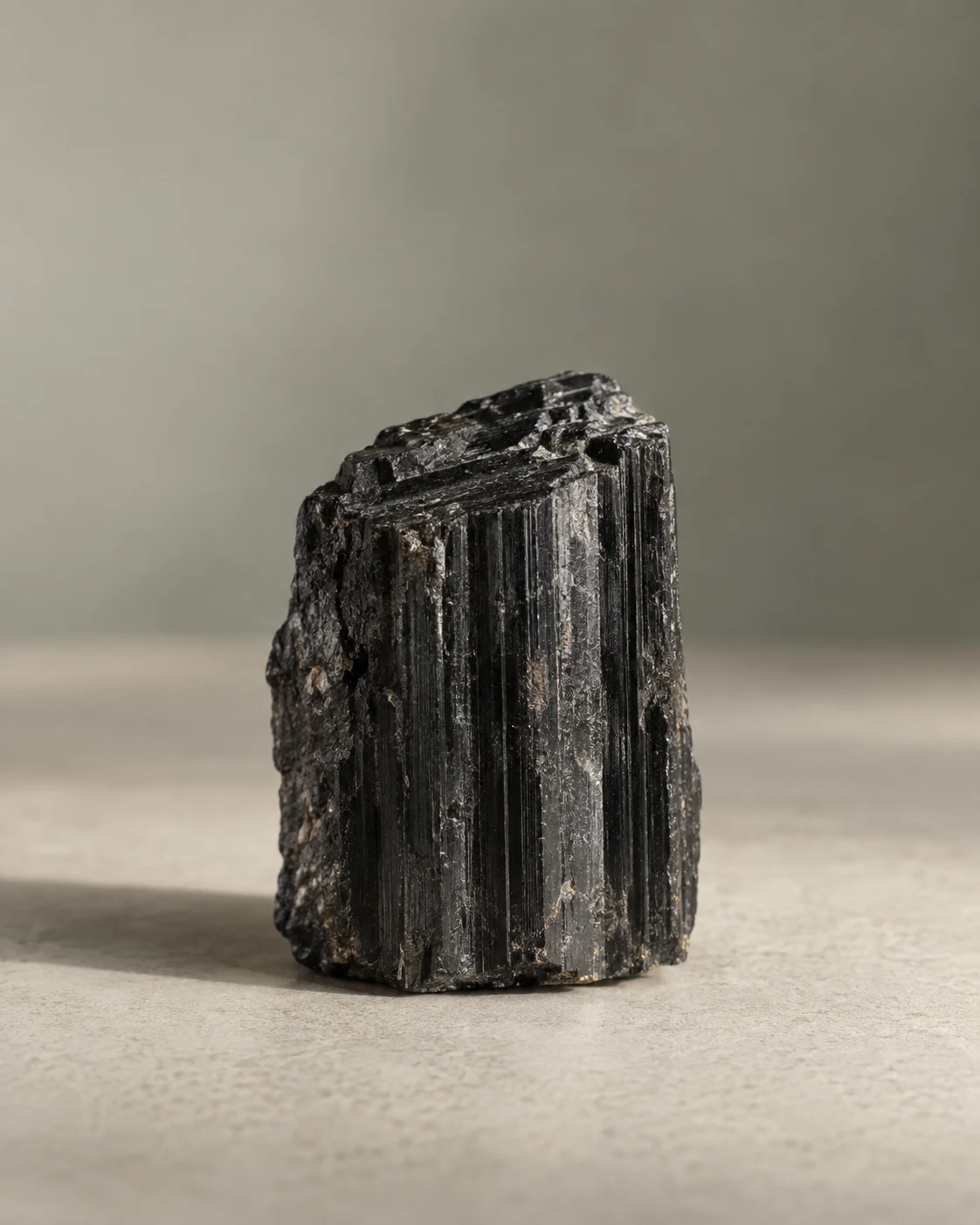
The stone of protection.
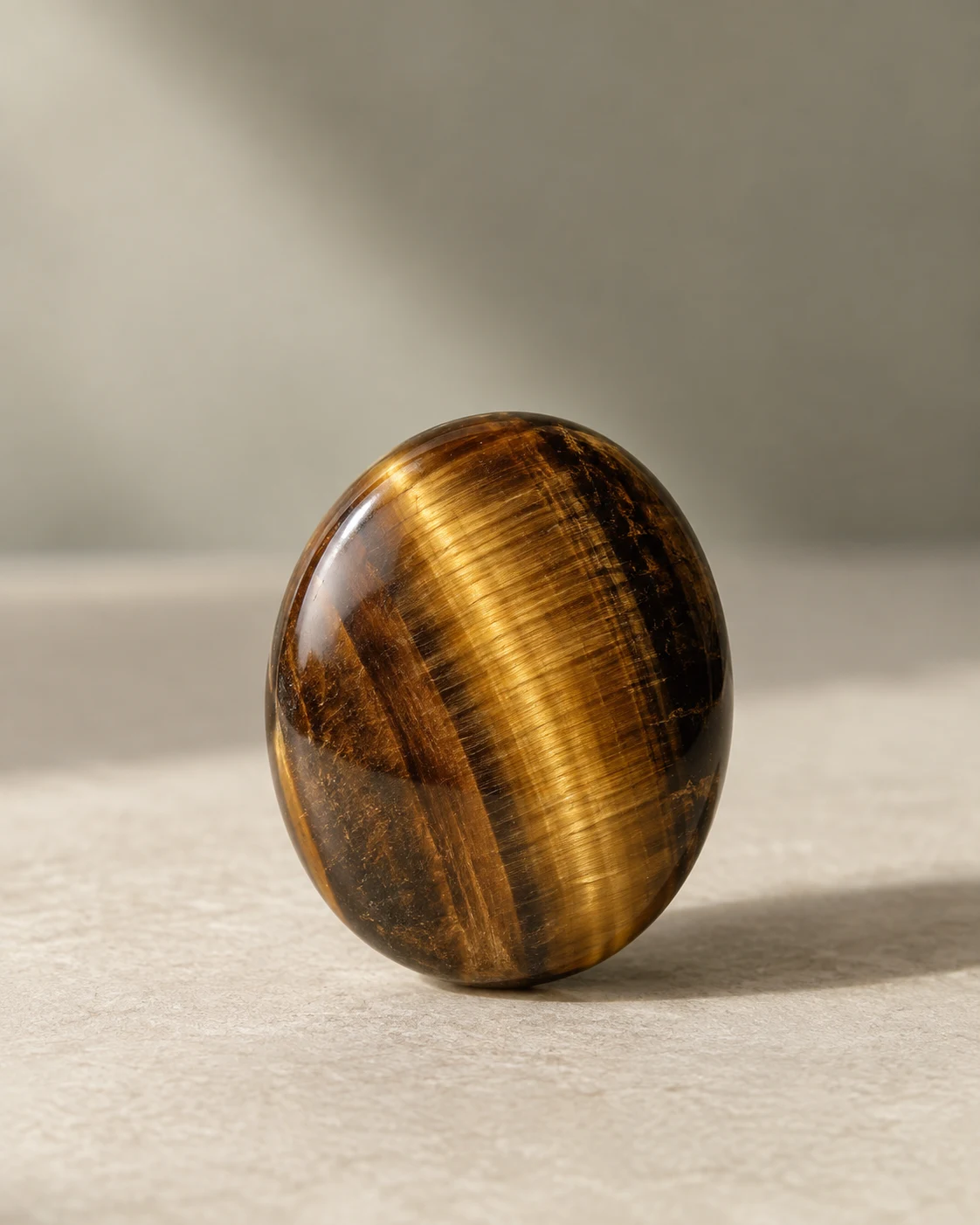
The stone of courage.
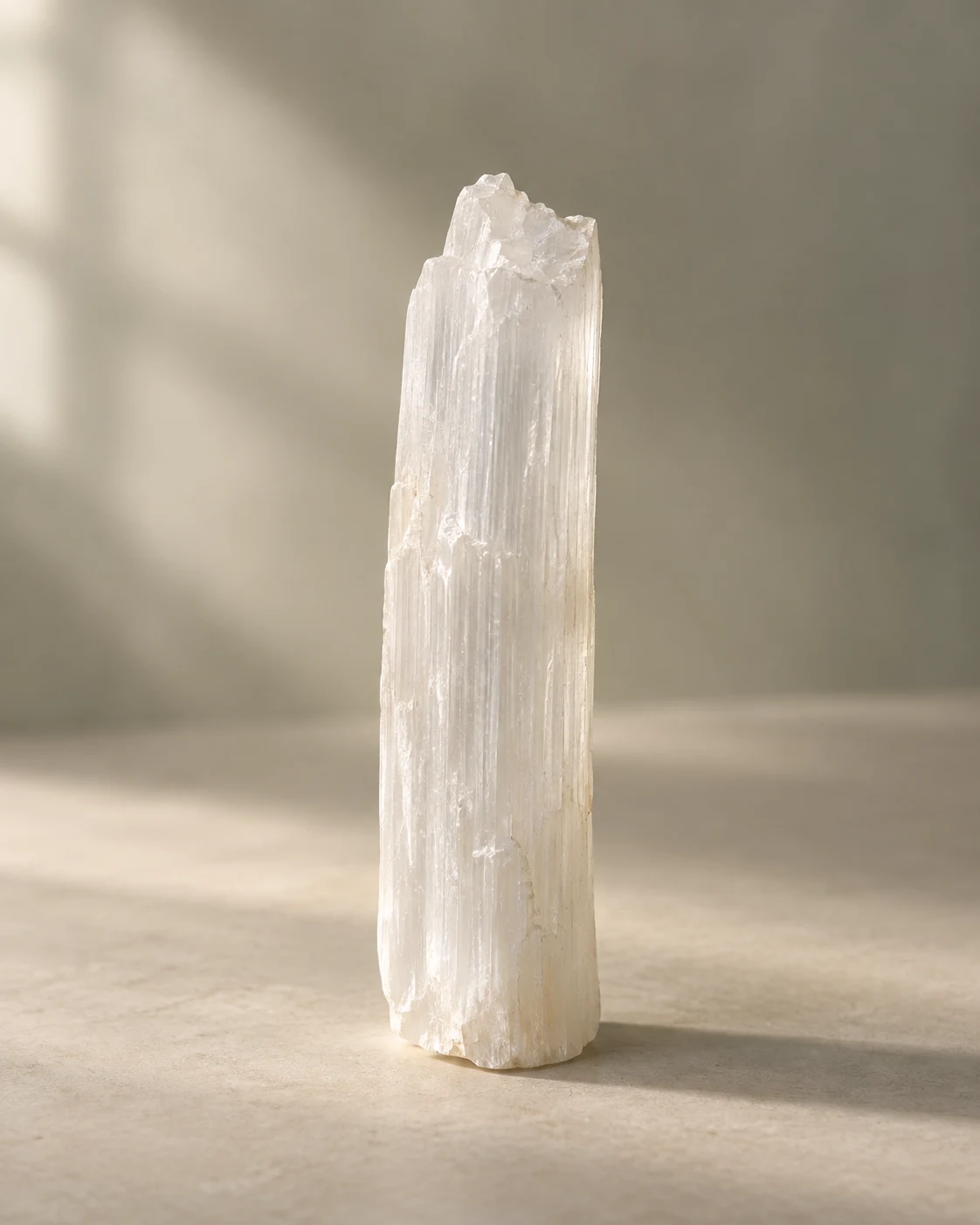
The stone of light.
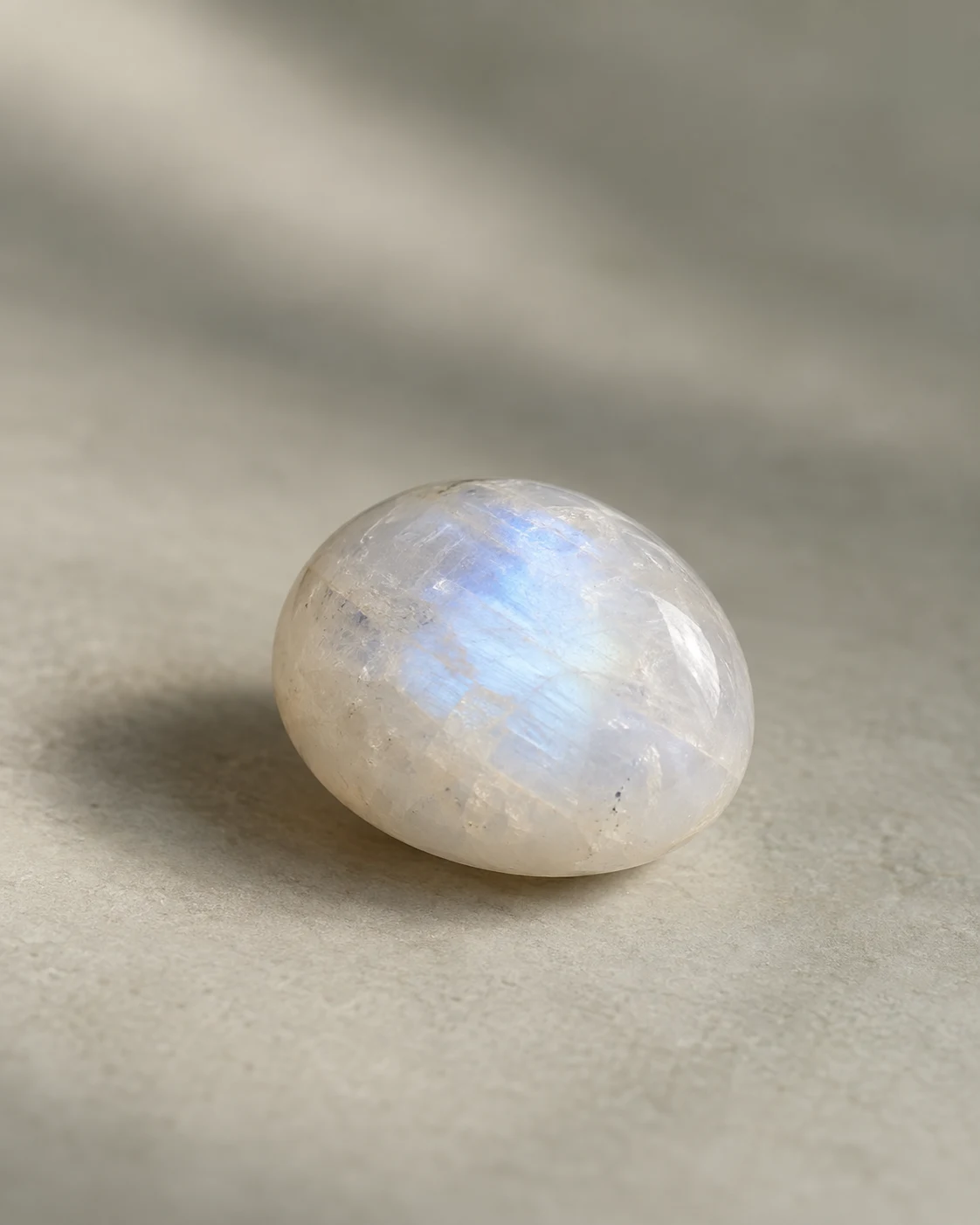
The stone of cycles.
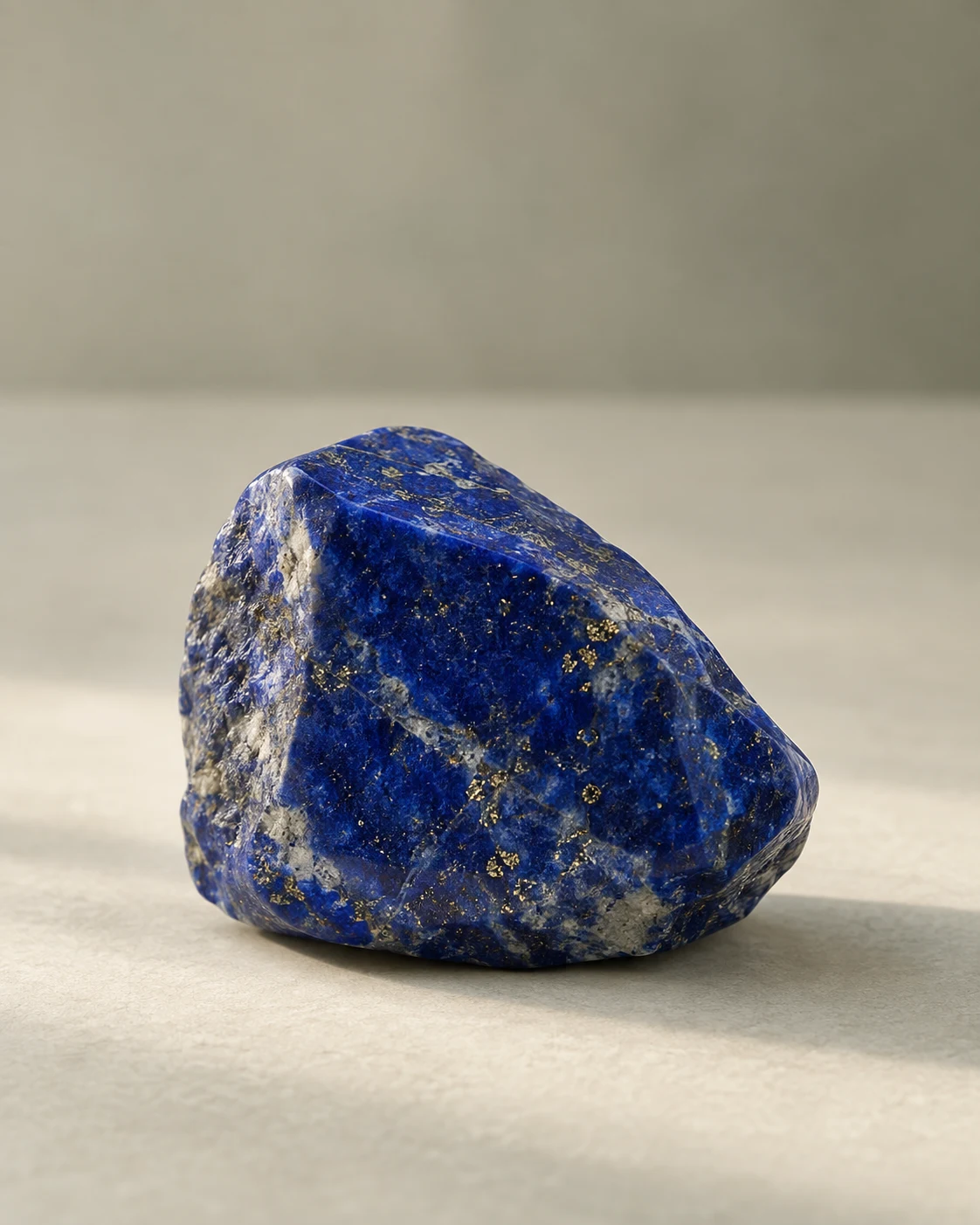
The stone of truth.
In Vedic astrology
Jyotish links a gemstone to each of the nine grahas. Arranged together with the Sun’s ruby at the centre, they form the Navaratna, a setting believed to hold every planetary influence in balance.
In this tradition a gem is never chosen by colour or preference. It is read from the birth chart — which planets are strong, which are weak, and which should be left alone — because a stone worn for the wrong planet is believed to strengthen a difficult influence rather than ease it.
In practice
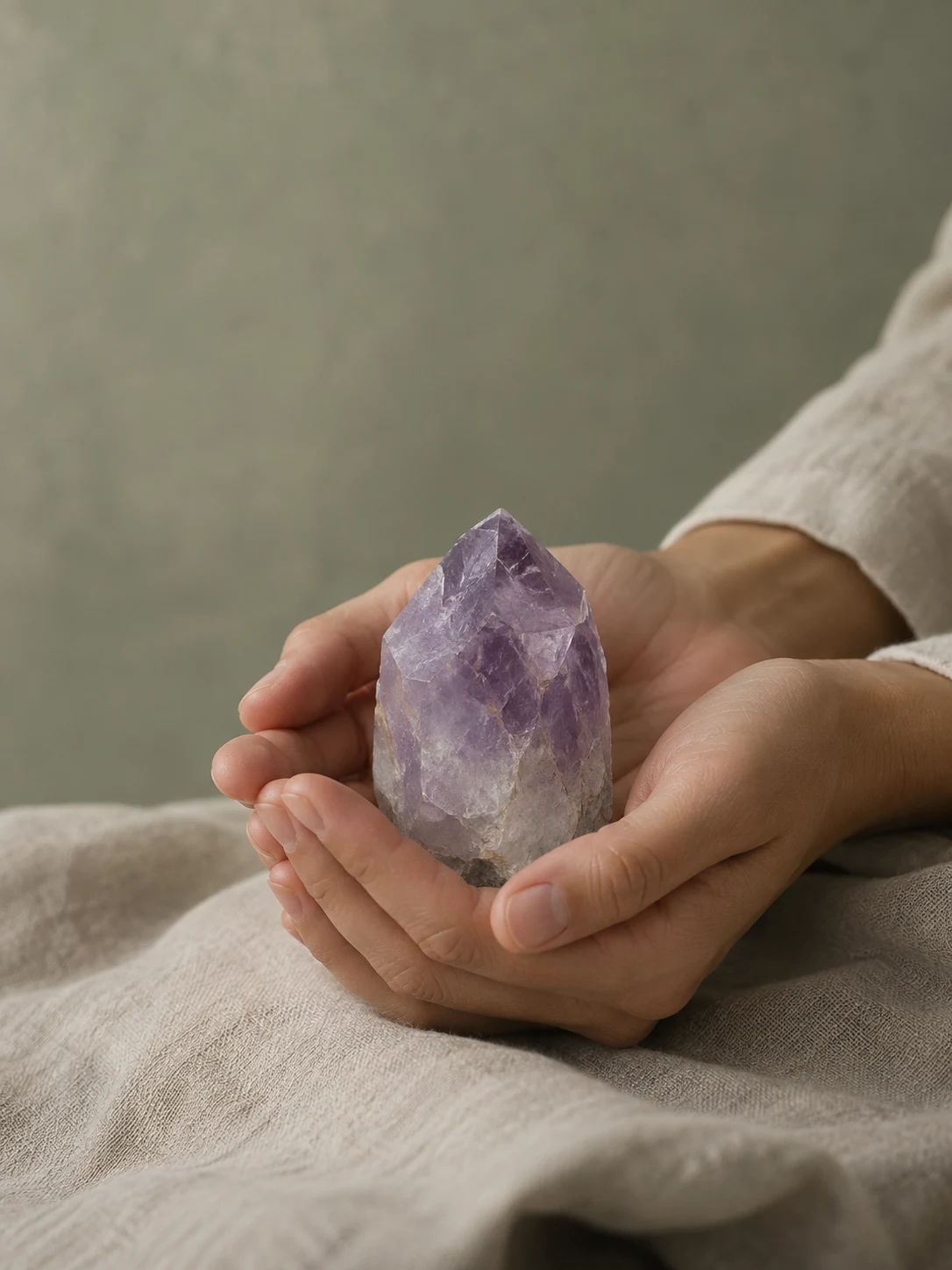
A stone rests in the palm while the breath slows. Its weight and coolness give the mind something simple to return to.
Lying still, stones are set along the chakras — a practice sometimes called a laying-on of stones — for a few quiet minutes.
As a ring, pendant or bracelet, so that the stone and what it stands for travel with you through the day.
On a desk, a bedside table or by the door. In Vastu, where a stone sits is considered as much as which stone it is.
Several stones arranged in a pattern around a central one, laid out with a single intention in mind.
Caring for stones
Practitioners “cleanse” a stone before first use and from time to time after — a way of beginning again. Not every method suits every stone.
A night on a windowsill, often at the full moon. Gentle enough for almost every stone.
The ring of a singing bowl or a bell, held near the stone for a few breaths.
Passing the stone through the smoke of incense or dried herbs.
A brief rinse under a tap or in a stream.
Take careNot for soft or porous stones — selenite dissolves in water.
Resting the stone on, or near, a bowl of dry salt.
Take careSalt can scratch and pit softer stones; keep it beside them instead.
A short time in morning light.
Take careAmethyst, rose quartz and citrine can fade in strong sun.
What we hold with intention holds us steady in return.