The path of the sun
Morning light from the east is gentle and welcome; afternoon heat from the south-west is strong. So openings face north and east, and the south and west are built heavier.
Vastu Shastra · For the home
Vastu Shastra is India’s traditional science of space — how a home is placed, opened and arranged around the directions and the light. This page explains its ideas for houses and flats, simply and without promises.
This is the sun over Delhi right now. A home is arranged around where it comes from.
Long before architects, builders in India asked the same questions of every house: where the morning sun would fall, where the wind would come from, where the fire should sit and where the family should rest. Vastu is the record of their answers.
What it is
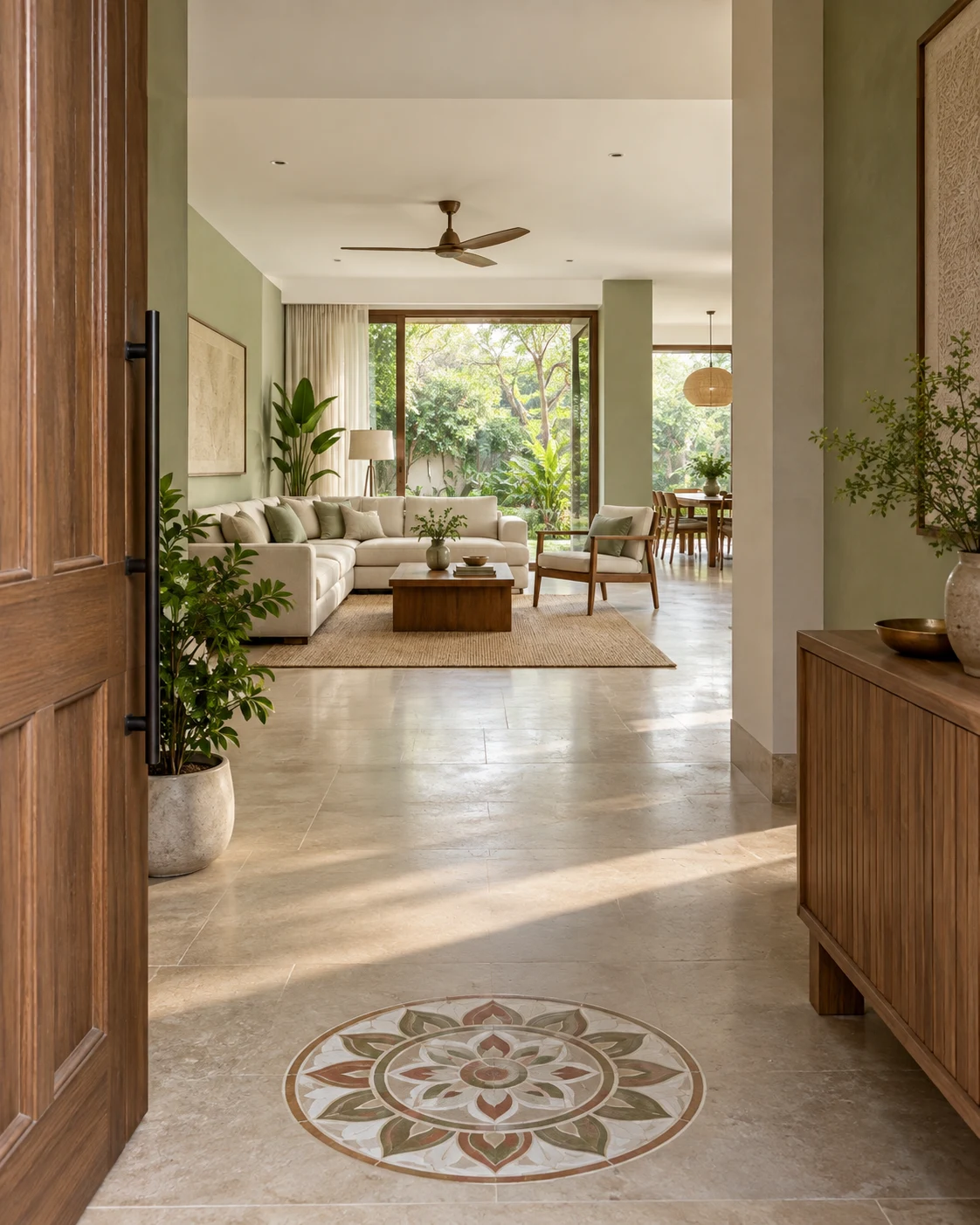
Vastu comes from vas, to dwell, and shastra means a body of knowledge. Together, Vastu Shastra is the traditional Indian study of how buildings are planned in harmony with nature — the sun, the wind, the earth beneath and the space within.
Its principles are set out in classical texts such as the Mayamata, the Manasara and the Samarangana Sutradhara, and a chapter of Varahamihira’s Brihat Samhita. They were written for temples, towns and palaces as much as for homes.
This page keeps to the home. It explains the ideas and the traditional placements — not as rules to fear, but as a way of looking at the space you live in.
Pancha Bhuta
Vastu reads a home through the five elements of Indian thought, and gives each one a direction where it is thought to sit most naturally.
Weight and stability. The south-west is kept heavy and closed — thick walls, tall furniture, the master bedroom.
South-westFlow and clarity. Underground water, a well or a sump belongs in the north-east, which is kept light and open.
North-eastEnergy and warmth. The kitchen, the stove and electrical fittings are placed in the south-east.
South-eastMovement and change. The north-west suits guest rooms, windows and things that come and go.
North-westOpenness. The centre of the home, the Brahmasthan, is left free — no walls, pillars or heavy furniture.
CentreBeneath it all
Most of Vastu’s advice for a home follows from these — which is also why much of it simply makes a house brighter, airier and calmer.
Morning light from the east is gentle and welcome; afternoon heat from the south-west is strong. So openings face north and east, and the south and west are built heavier.
Each direction is linked to an element. A home is thought to feel settled when each element is given its place — fire where fire belongs, water where water belongs.
The middle of the home is treated as its heart. Keeping it open and uncluttered is one of the simplest and most repeated ideas in Vastu.
The eight directions
Each direction has a guardian deity and a character of its own. Read together they form a map of the home — where to open, where to rest, where to cook and where to pray.
Directions are taken from a compass reading at the centre of the home, not from which way the road runs. It is the first thing any Vastu reading establishes.
The Vastu Purusha Mandala
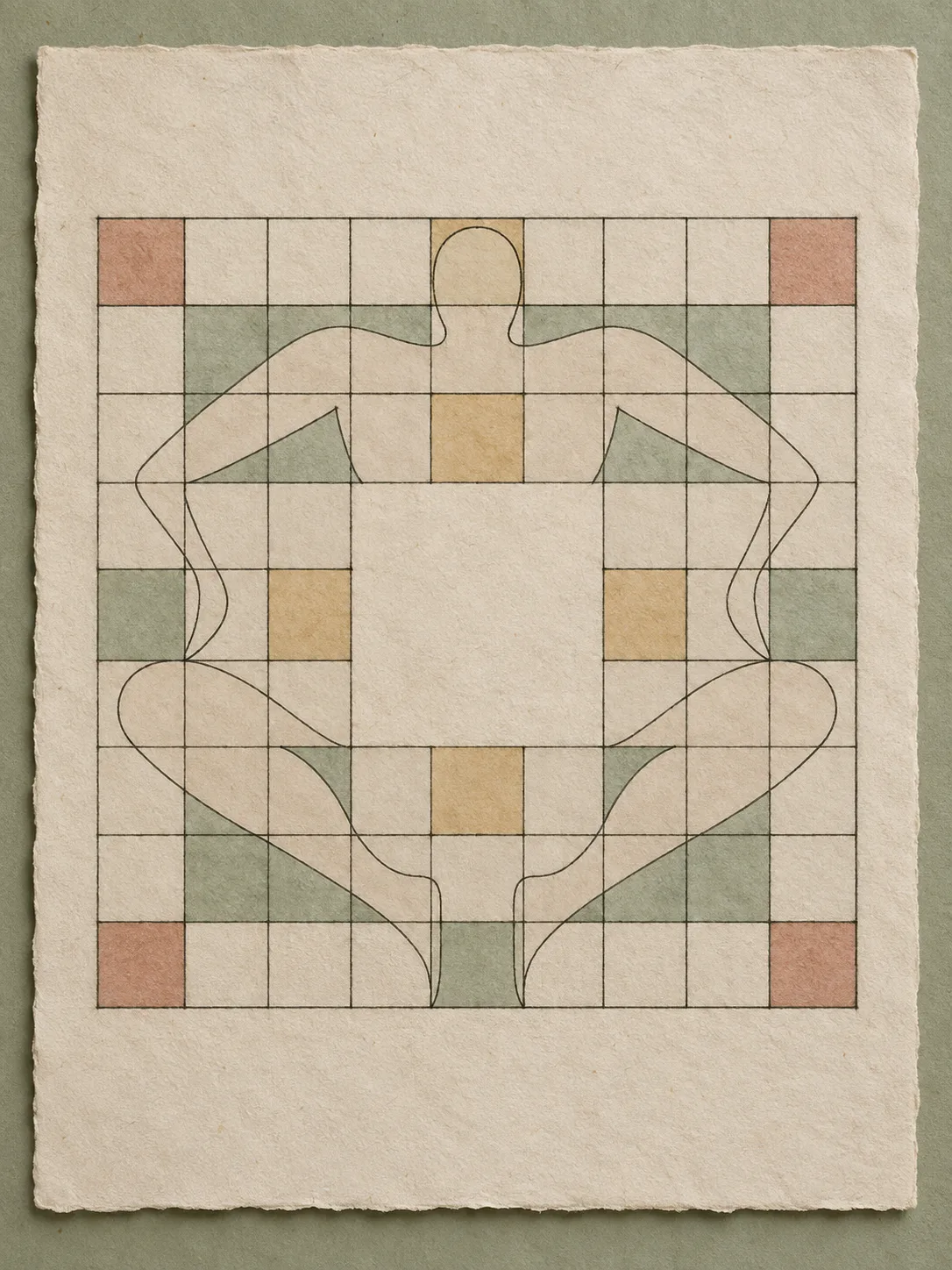
At the heart of Vastu is a square diagram, the Vastu Purusha Mandala. For a home it is most often drawn as a grid of 81 squares, nine by nine; some texts use 64. Each square, or pada, is presided over by a deity.
Across it lies the Vastu Purusha, the spirit of the site — head to the north-east, feet to the south-west. That is why the north-east is kept light and pure, and the south-west heavy and strong.
The nine squares at the centre belong to Brahma. This is the Brahmasthan, the part of the home traditionally left open.
Room by room
These are the placements the tradition most often gives. Few homes match all of them — and they don’t need to.
North, east or north-east
Lets in morning light and fresh air.
Keep it well lit and uncluttered; the door opens inward.
North, east or north-east
The brightest, most open part of the home.
Heavier sofas and cabinets along the south and west walls.
South-east
The corner of Agni, the fire element.
Cook facing east. The north-west is the usual second choice.
South-west
The most stable, grounded corner.
Sleep with the head to the south or east, not the north.
West or north-west
Air and movement suit growing years.
A study table facing east or north.
North-west
The direction of Vayu — of coming and going.
Suits a room that is used now and then.
North-east
Ishana, the most sacred and lightest corner.
Face east or north while praying; keep it simple and clean.
North-west or west
Away from the sacred north-east and the centre.
Keep it dry, ventilated and the door closed.
South, west or south-west
Adds weight where weight is wanted.
Climbs clockwise; never in the centre.
Sump north-east · tank south-west
Underground water in the light corner, stored water in the heavy one.
Fix leaking taps and pipes promptly.
Every day
Much of Vastu in daily life is simply care — light, air and order, kept up.
The lightest corner of the home — no heavy furniture, storage or clutter.
Open east and north windows early; daylight and fresh air come first.
Wardrobes, bookshelves and safes sit best along the south and west walls.
Shoes, bins and boxes are kept away from the main door, which should open fully.
Mirrors are usually kept on north or east walls, and not facing the bed.
Leaking taps, stopped clocks and cracked glass are repaired or removed.
Worth knowingSimple upkeep is often the first thing a Vastu reading asks for.
Without breaking walls
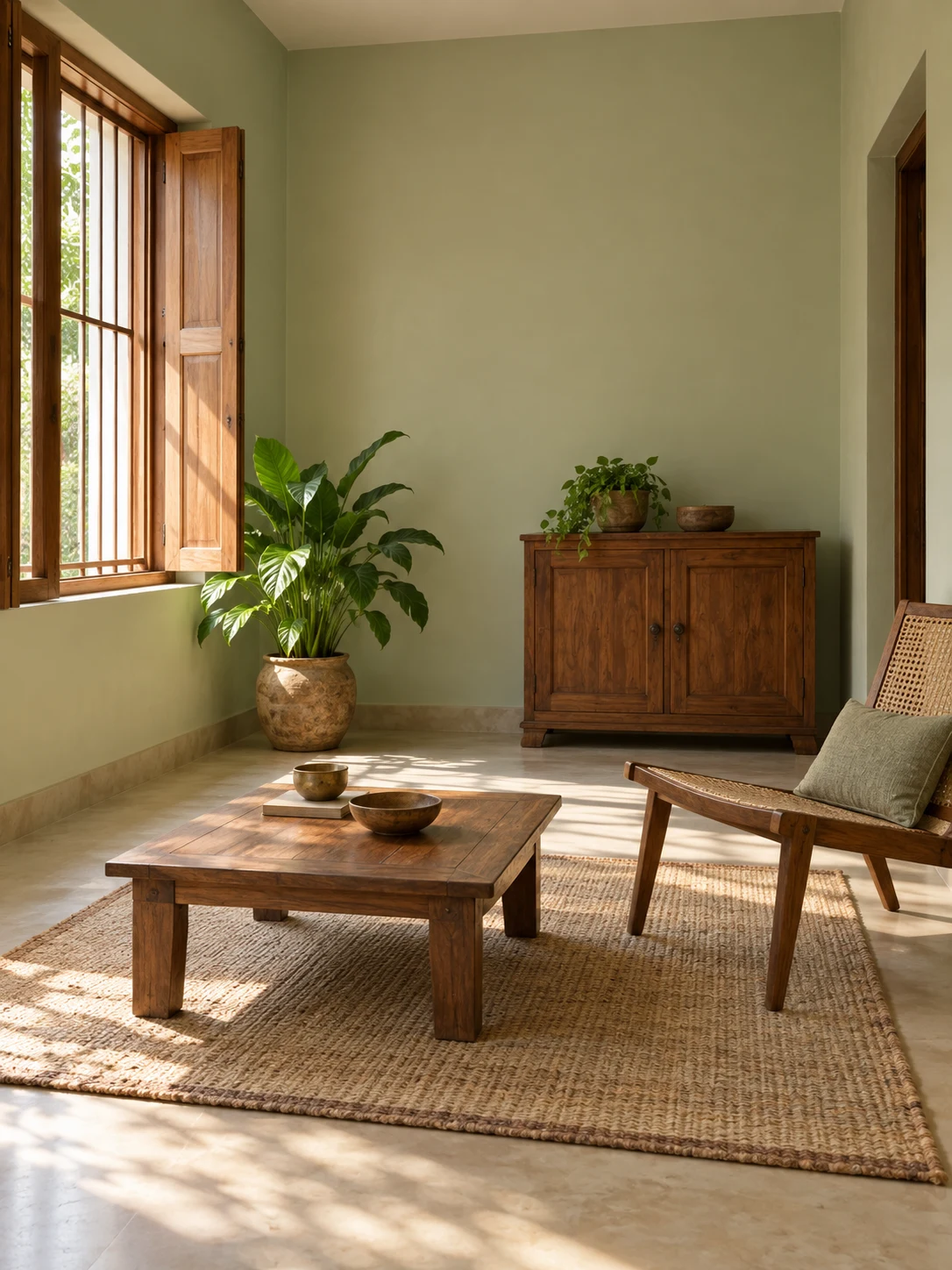
Most suggestions can be met by moving furniture, a bed or a desk — not by breaking walls.
Clearing and brightening this one corner is the change most often recommended.
Soft, light colours in the north and east; warmer, deeper tones in the south and west.
A tulsi plant in the north, east or north-east is traditional; thorny plants are usually kept outside.
Some practitioners suggest yantras, pyramids or metal strips where a room can’t be moved. They are symbolic — never a substitute for light, air and order.
Questions
What people most often ask about Vastu for a home, answered plainly.
Vastu Shastra is India’s traditional science of space — how a building is placed, opened and arranged around the directions, the sun, the wind and the five elements. Its principles are set out in classical texts such as the Mayamata and the Manasara.
The tradition favours an entrance in the north, east or north-east, which lets in the morning light and fresh air. A home facing south or west is not ruled out: Vastu divides each wall into parts, and reads where along it the door falls.
In the south-east, the corner of Agni, the fire element, with the cook facing east. The north-west is the usual second choice.
The master bedroom traditionally sits in the south-west, the most stable corner. Sleeping with the head to the south or the east is preferred, not to the north.
The centre of the home — the nine squares that belong to Brahma in the Vastu Purusha Mandala. It is traditionally kept open, free of walls, pillars, heavy furniture and clutter.
Usually, yes. Most suggestions are met by rearranging — moving a bed, a desk or heavy furniture, clearing the north-east, using light and colour. Symbolic corrections such as yantras are sometimes suggested where a room cannot be moved, but they are never a substitute for light, air and order.
Yes. The directions are read from a compass at the centre of the flat itself, not from which way the road runs, and most of the guidance — what goes where, what is kept clear — works within the walls already there.
A home is not only built. It is opened to the light, kept in order and cared for — and then it begins to care for you.